
Driving in Georgia: the rules, the roads and the habits
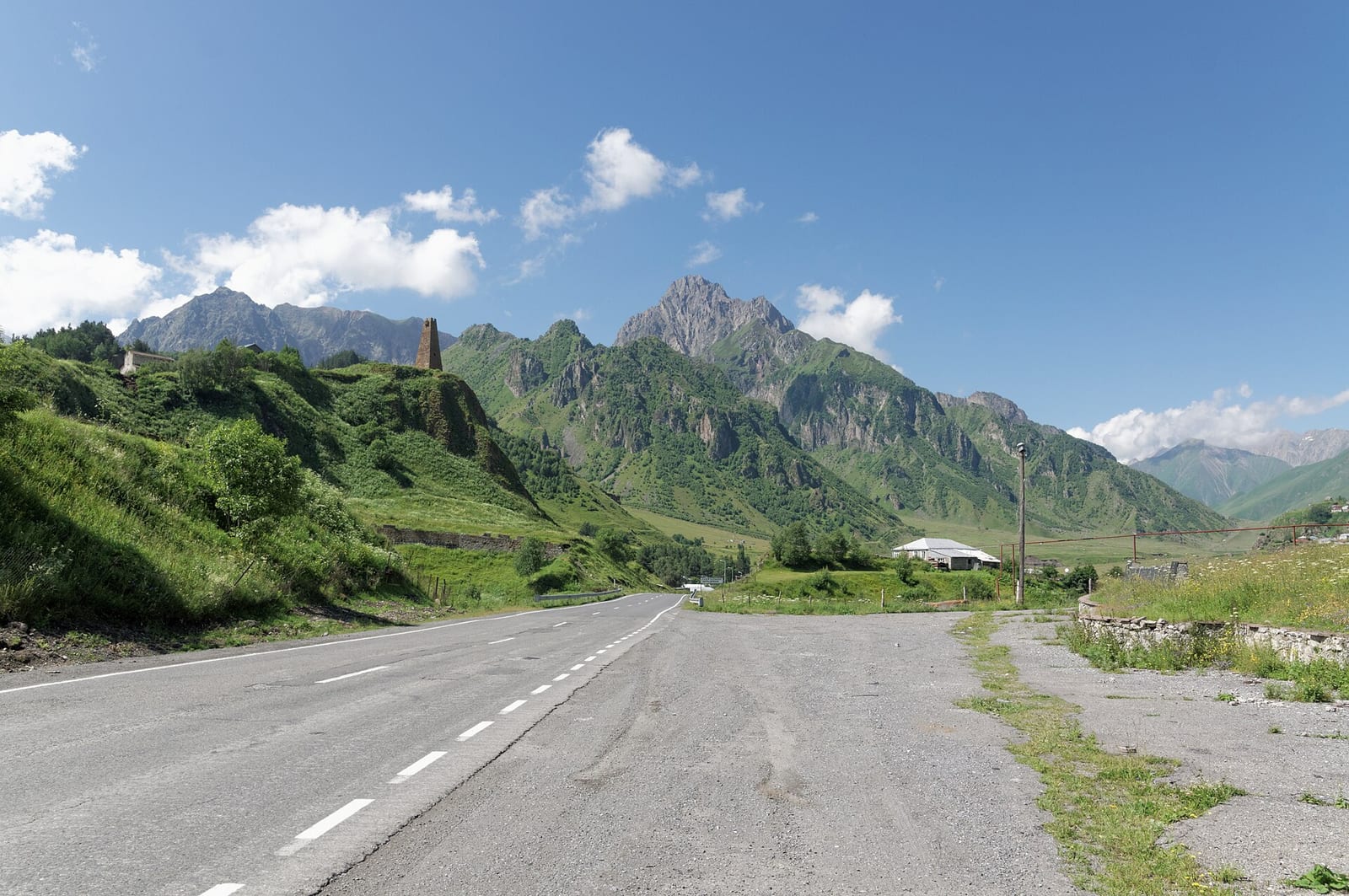
Photo: Vyacheslav Argenberg · CC BY 4.0
Driving in Georgia is easier than most visitors expect and less predictable than they are used to. The paperwork is simple: your national licence is accepted for short stays, and an international permit is worth carrying only if your licence is not in Latin script. Traffic drives on the right, seat belts are required in the front, and the alcohol limit is effectively zero — do not test it.
The roads split into three kinds. Motorways between the big cities are new and fast. Secondary roads are usually paved but patched, and a pothole can appear in the middle of an otherwise good surface. Mountain roads to places like Ushguli or upper Racha turn to gravel, and after rain they turn to something you want four-wheel drive for.
The habits take a day to read. Overtaking happens with less margin than you would leave. Indicators are used selectively. Cows and pigs have right of way in villages, in practice if not in law, and they are genuinely unpredictable — slow down rather than steer around them. At night, unlit vehicles and pedestrians in dark clothes are the real hazard on rural roads; if you can avoid driving mountain roads after dark on your first day, do.
Fuel stations are frequent on main routes and sparse in the mountains — fill up before Svaneti or Racha rather than during. Most take cards, but carry some cash for the small ones.
None of this is a reason not to drive here. A car is what makes Georgia work as a trip: the canyons, the monasteries and the mountain villages are not on a bus route, and the distances between them are short. Just leave earlier than the map suggests.
The most beautiful places in Georgia, easily reachable with our cars
Choose a car